
A broken printer got us Open-Source
In 1980, a young programmer at an MIT AI laboratory wrote a piece of software that pinged users whenever the shared printer jammed or sat idle. It was a small thing, but a useful one. Back then, a single printer served an entire building, sometimes sitting on a different floor.
Then the rules tightened. Hardware companies wanted to gatekeep access to their machines, blocking anyone outside from writing software for their printers. Where others accepted it, this young engineer revolted.
It was a turning point for the industry, the start of a revolution that has shaped software engineering ever since. He argued that people should be free to write and share their own code on the devices they use. This was the beginning of the free software movement, the foundation from which the broader open-source world would grow in the years to come.
That computer scientist is Richard Stallman, and the movement he started gave us the GNU Project.
Since then, every time someone got greedy, people revolted and made something better. That's the beauty of open-source. You don't need to be controlled by the tools you use.
The tools should work for you. The tools should empower you. The tools should be practical to adopt and not a burden for you to maintain.
We started with a similar thought: to make design tools accessible to everyone. Current CAD tools are burdening architects, engineers, and construction users in general with huge costs and decreasing utility.
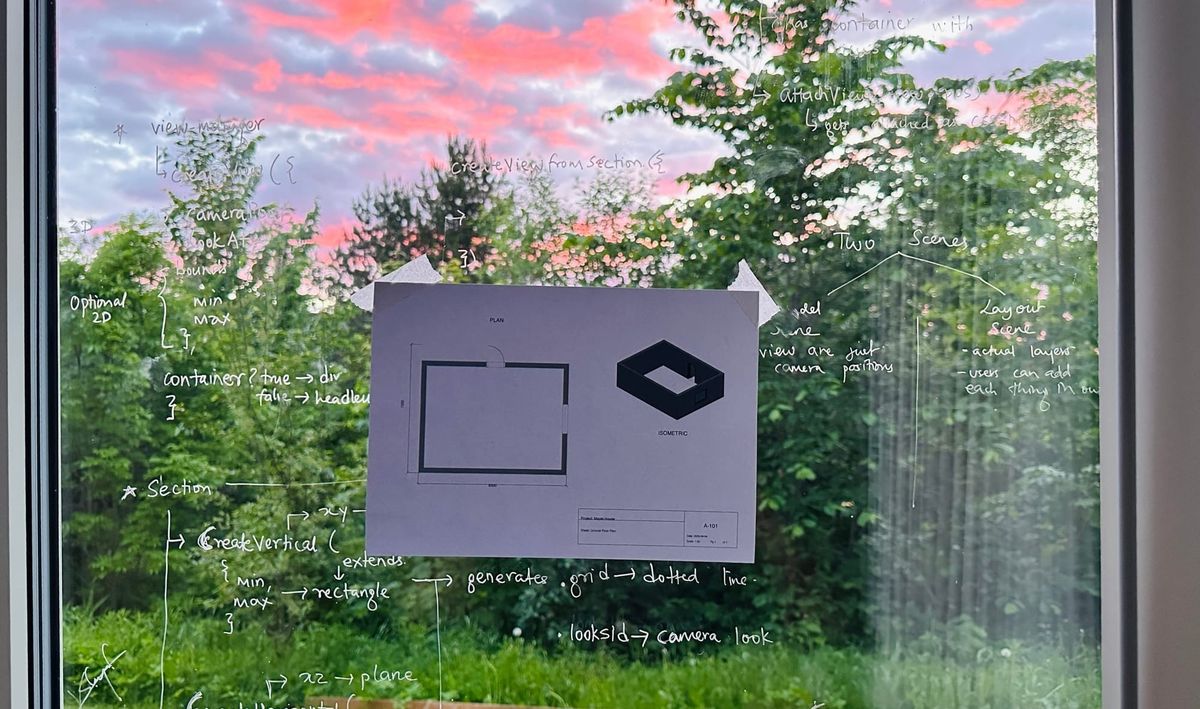
After almost a year, we have reached a major milestone. We can now create accurate technical drawings using the OpenGeometry Kernel. This will be coming up in the next release.
Sign up at opengeometry.io to get the updates
With this release, we give back to the open-source world. It feels like we have completed a loop. We can generate CAD printouts because of a movement that began with a broken printer.
One more thing before you go: we are not stopping here! We have now started building on top of this. We are building our own app, which wouldn't hold you back. More on this next week. But if you're curious, our inbox is open.